.svg)

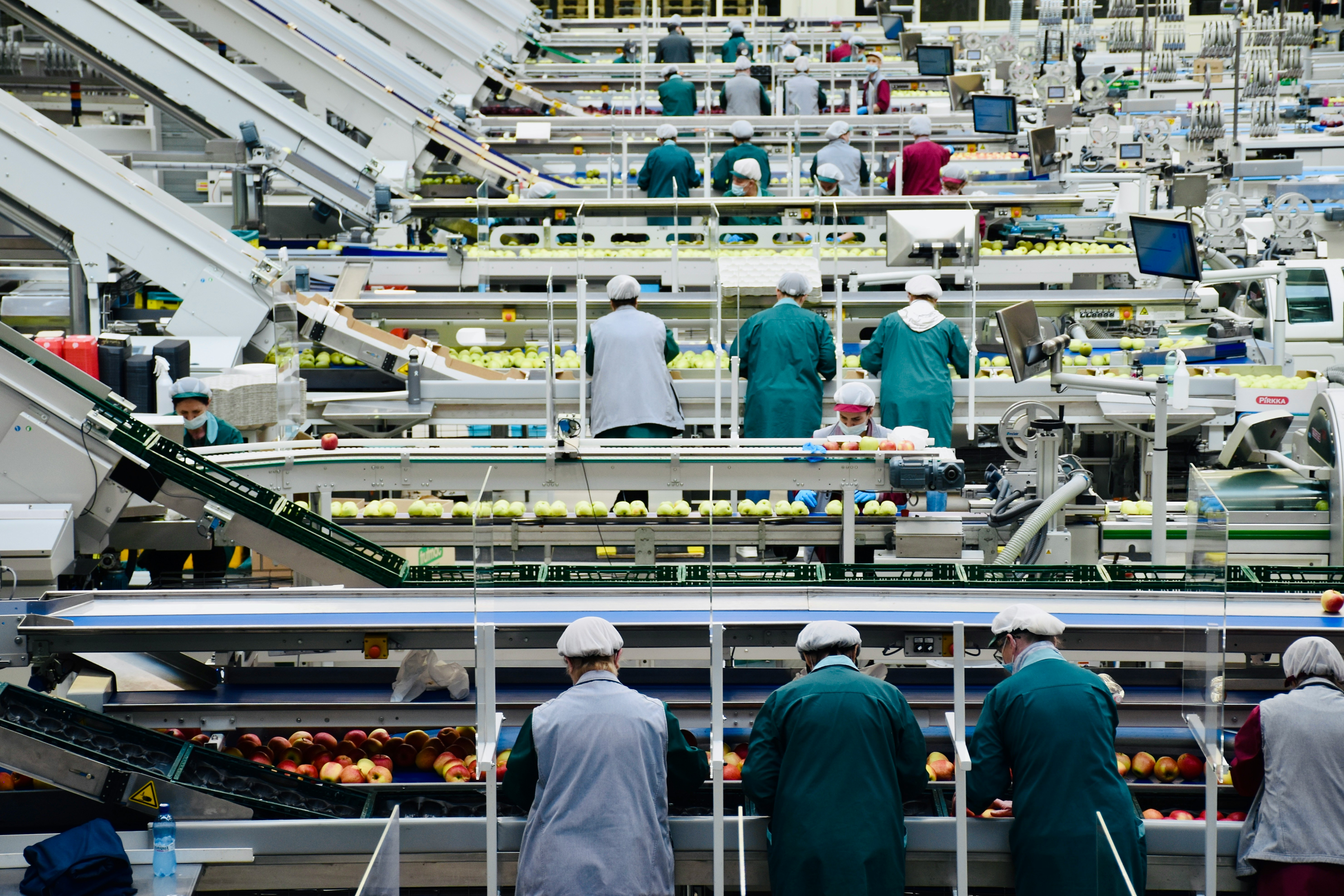

For produce companies, protein processors, and perishable food businesses, supply chain isn't a back-office concern. It is a direct driver of margin, customer trust, and in some cases whether the business survives a bad season or a regulatory event.
I have spent a lot of time inside agricultural supply chains, and the pattern I see consistently is that the margin opportunity hiding in the supply chain is almost always larger than leadership thinks. Not because the teams are doing a bad job, but because supply chain complexity in perishable food accumulates in ways that are hard to see from the inside.
What Makes Perishable Supply Chains Different
The fundamental difference between a perishable supply chain and a standard manufacturing or distribution supply chain is that time is margin. In a standard supply chain, a delay is a cost. In a perishable supply chain, a delay can be a complete loss.
That reality shapes everything: how vendor lead times need to be managed, how inventory has to be positioned, how logistics windows work, how quality control is designed, and how communication flows between procurement, operations, and sales. When any one of those breaks down, the cost doesn't show up as a line item somewhere. It shows up as product that didn't make it to market in usable condition, and everything that went into producing it.
The Structural Problems I See Most Often
Across the agricultural operations I have worked with, a handful of structural problems show up repeatedly. They are worth knowing because most of them are fixable with the right governance framework, even when the operation is large and complex.
Procurement and sales operate on different time horizons. Procurement is planning six to eight months ahead. Sales is working six weeks ahead. Nobody has built the operational bridge between them. The result is packaging materials ordered too late, crop sourcing commitments that don't match what the sales team has actually sold, and a constant cycle of scrambling that everyone has learned to live with but that costs real money every season.
We worked with one of the largest year-round produce operations in North America. International operations were running on a grower-based sourcing model where packaging had six to eight weeks of lead time but requests were arriving with one to two weeks of notice. Inventory was tracked across four or more separate Excel files. Grower relationships were managed inconsistently, so nobody had a reliable picture of what was committed or outstanding across the operation.
"The difference between what worked and what didn't wasn't about people. It was whether the structural conditions existed for the process to work." -- BEI Assessment Finding
The problem wasn't the people. The teams were capable and hardworking. The problem was that the structural conditions for the process to work didn't exist. No unified tracking. No governance framework connecting domestic and international procurement. No cross-functional meeting cadence that put sales decisions and procurement realities in the same conversation.
We consolidated the tracking systems, delivered seven standardized governance documents and tools, and established a cross-functional operating cadence. The result was that the organization had visibility, coordination, and accountability across its entire supply chain for the first time. The infrastructure that made the domestic operation successful was now applied consistently to everything.
Cold Chain Integrity Is Not Just a Food Safety Issue
Cold chain management is often framed primarily as a compliance and food safety concern. And it is that. But it is also a margin issue and a customer relationship issue.
When cold chain integrity breaks down, the visible cost is the load or the pallet that doesn't make it. The less visible cost is the customer conversation about quality, the deduction on the invoice, the trust that has to be rebuilt. In retail and foodservice relationships where margins are already compressed and buyers have alternatives, repeated cold chain issues erode the relationship in ways that don't show up in a single incident report but absolutely show up in your customer retention over time.
The companies that manage cold chain well treat it as a system, not a checklist. They have documented protocols for temperature monitoring, handoff procedures, and exception handling. They review cold chain performance as a leadership metric, not just an operations metric. And they build cold chain integrity into vendor and carrier evaluation rather than discovering problems after the fact.
Vendor and Carrier Management as a Strategic Function
In perishable supply chains, your vendors and carriers are not interchangeable. The grower who has delivered consistently for fifteen seasons is not the same risk profile as a new sourcing relationship in a new geography. The carrier who has your temperature requirements dialed in is not the same as the one bidding lowest on your next lane.
A lot of ag and food businesses treat vendor and carrier management as a procurement function when it needs to be at least partly a strategic one. Diversifying sourcing risk, building relationships with backup suppliers for critical inputs, evaluating carrier performance against actual cold chain outcomes rather than just price and on-time delivery, these are supply chain decisions that materially affect margin and risk.
Where to Look First
If you are running a perishable supply chain and you want to find the margin, here is where to start. Look at your losses by category: how much product is being shrunk, discarded, or deducted by customers, and what are the root causes? Look at your procurement-to-sales timeline alignment: are the people making sourcing commitments working from the same demand picture as the people making sales commitments? Look at your vendor performance data: are you measuring it consistently and using it to make sourcing decisions? And look at your inventory tracking: is there a single source of truth, or is the data spread across systems and spreadsheets that don't reconcile?
Those four areas almost always contain real money. And finding that money doesn't require a major technology investment or an organizational restructuring. It usually requires governance, visibility, and a cross-functional cadence that puts the right people in the same conversation on a regular basis.
If you are running a perishable supply chain and want to understand where the margin opportunities are, BEI Advisors works specifically in agriculture and food and beverage supply chains. We diagnose the structural breakdowns and build the governance frameworks that translate into real operational improvement. Reach out and let's talk about what your supply chain could look like.
Better Built Doesn't Happen by Accident
Growth created complexity. Complexity is costing you. The path forward starts with a single conversation.
